Are your finance, accounting, and operations helping you win, or just keeping score?
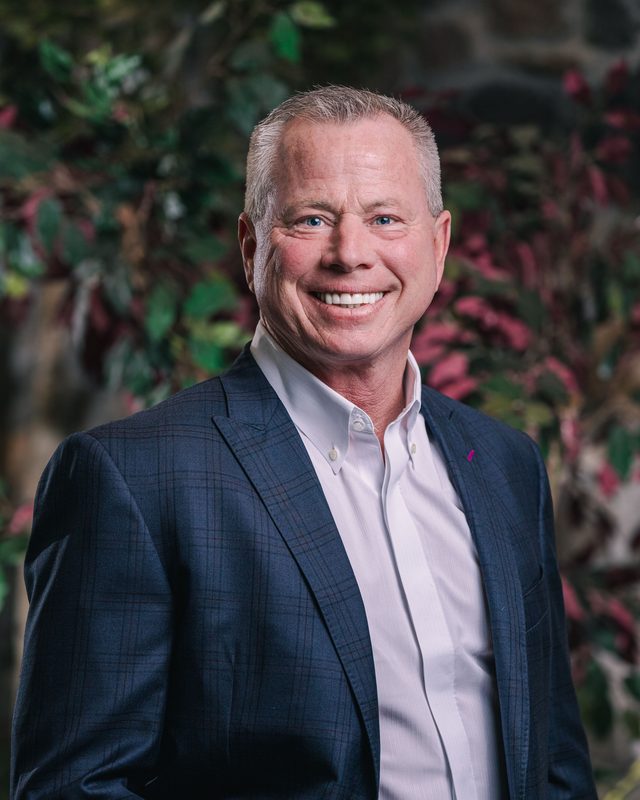
I'm a fractional CFO and chief AI officer (CAIO). We work together to speed up your cash, cut your costs, and get your business ready for a profitable exit.
One accountable officer for your numbers and your technology. I serve as your trusted teammate, working with your bankers, attorneys, CPAs, Board of Directors and potential buyers or acquisition candidates.
Velocity. Faster cash, leaner processes, and reporting that puts the facts in front of the people who can change things. We build it together.
We design it together: the people, the process, and the systems. You get a working department, not a pile of software.
I work beside them on the systems jobs they don't have time for: ERP choices, automation, AI, and reporting.
Are your systems built for the way you run the business, or are you missing competitive insights hidden in your data? Winning management tools provide you with a measurable competitive edge.
In my experience, businesses start out either outsourcing their bookkeeping or cramming all of their operations into QuickBooks and spreadsheets. If they get really ambitious, they partly install an ERP (one system that runs accounting, orders, and inventory) and fight it to get the information they need to run their business. QuickBooks is a good tool, and it gets better and smarter every year. The trouble starts when it is asked to be the only tool.
Map your own processes
Run the five steps on paper. Question, delete, simplify and speed up before any software is bought.
Fit them into an off-the-shelf ERP
In my experience a well-chosen ERP covers about 75% of what a company needs, on a proven and supported core.
Build the rest with AI
Use AI tools such as Claude to write the software for the remaining 25%: the matching, chasing and reformatting that used to take clerical staff.
Shorter close, billing and collection cycles release cash faster.
Routine work shrinks, and your people move to review and analysis.
A standard core replaces a large custom build.
Reporting reaches the people with the power to act while it still matters.
Faster, leaner processes are a competitive advantage that compounds.
Success stories
Where I have run this playbook.
Built the accounting and finance department for a hospitality group with under $20 million in revenue. Merged several stand-alone systems into one ERP and put AI agents on reporting. The team was 2.5 people plus me. With the team, I improved annual cash flow by more than $3 million by showing managers the numbers daily and questioning every cost and price.
CFO of ResourceX through its sale to Tyler Technologies. Board of Directors of Community Funded through its 2023 sale to GiveCampus.
CFO of Roche Constructors in Greeley, overseeing about $1 billion in commercial construction plus land development.
CFO of Innosphere Ventures, analyzing about 20 medical and technology startups across two funds totaling roughly $24 million.
You never know when an offer you can't refuse will arrive. Clean books, fast reporting, and documented systems let you say yes quickly.
How we work together
Two ideas run every engagement.
Anyone can hand you a list of services. The order the work gets done in decides the result, and two books set that order for us.
Right people, right seats, before anything else.
Collins found that the great companies decided who before they decided what. The people came first and the strategy followed.
Seats before systems. The right person in the right seat beats the best software.
We start with how the business really runs, whatever the org chart says.
It multiplies momentum a disciplined team already has. It does not create that momentum.
We look at the team and the seats before we choose a system. We do not skip that step to save time.
Five steps, in order, with no shortcuts.
McNeill, a former president of Tesla, sets out the method he learned from Elon Musk. Companies tend to reach for automation first. The method puts it last, after the first four steps have removed everything that should not exist.
The order is the point. A step done out of sequence just speeds up waste. Here are the five steps, applied to a finance function.
- Question every requirementEvery report, approval and control gets a named owner and a reason. No owner, no requirement.
- Delete every possible stepCut the approvals, reconciliations and reports nobody uses. If you never have to restore anything, you cut too little.
- Simplify and optimizeStreamline what is left. Polishing a step that should not exist is wasted effort.
- Accelerate cycle timeShorten the close, the billing cycle and the collection cycle. Faster cycles release cash.
- Automate lastNow software and AI earn their keep, on a process that is already lean.
I have more than 30 years as a CFO, plus an educational background, that let me run these steps on the books and on the systems that hold them.
Capital and transactions
Raising money or selling the company.
Both start with numbers an outsider can trust. Be the company investors can read. A sale is won in diligence.
About
A CFO who uses AI to make companies faster.
I've spent my career as a CFO and company builder, working with startups, venture capital firms, and Fortune 500 companies. I began in public accounting, performing audit, tax, and ERP implementations, then moved into executive finance and operations roles across manufacturing, construction, hospitality, and B2B SaaS.
My foundation is an undergraduate degree in accounting and MIS and a Master's in Corporate Finance, plus further work in blockchain and no-code AI programming with MIT.
Today I'm focused on putting AI agents to work in small and medium-sized businesses, using them to compress operating cycle times and, in turn, forecast cash flow more accurately. Realizing that potential means bringing a Chief AI Officer role into the C-suite, either by assigning it to an existing officer or by adding the position.
Outside work, I'm a father of four who loves hiking, biking, golf, and any activity that brings the family together.
Contact
Let's talk about your needs.
Send a few lines about your business, or book a short call.
Windsor, Colorado. Working with companies across the United States, on site and remote.
Fractional CFO and systems consulting for small and mid-sized businesses.
Questions owners ask before they call · One-page executive summary (PDF)
linkedin.com/in/bill-fisher-cfo · Business Finance AI on LinkedIn